Three Scientists Recognized for Diverse, Creative, and Impactful Approaches to Disseminating Arabidopsis Knowledge
The North American Arabidopsis Steering Committee (NAASC) is deeply committed to the development, participation and recognition of Arabidopsis researchers from a diversity of backgrounds and experiences and to honoring and recognizing those that go above and beyond to positively impact the Arabidopsis Community.
The Dissemination of Arabidopsis Knowledge awards recognize community members that have demonstrated sustained commitment to sharing knowledge using a diversity of approaches including (1) innovative teaching using Arabidopsis resources; (2) outreach activities/initiatives utilizing Arabidopsis knowledge and resources, and/or (3) communication of Arabidopsis knowledge.
The individuals serve as role models for our community.
These awards are given in two categories: early career (graduate student or postdoctoral scholar) and later career (faculty and other non-trainee position). Nominations were submitted by community members that then organized review packages consisting of applicant CV, candidate statement of their suitability for the award, and several letters of support written by colleagues. A selection committee comprised of NAASC members and several community members review and select awardees. NAASC thanks all the community members that submitted nominations, gathered supporting letters, and helped review and select this year’s awardees!
This year’s recipients will participate in an online panel webinar this fall. Sign up to receive an invitation to the online panel and a link to the recording afterwards.
Based on nomination & support letters written by colleagues, the following inspirational Arabidopsis Community leaders were selected for this prestigious honor this year:
Tanya Berardini, later career category
Daphne Ezer, later career category
Courtney Price, later career category
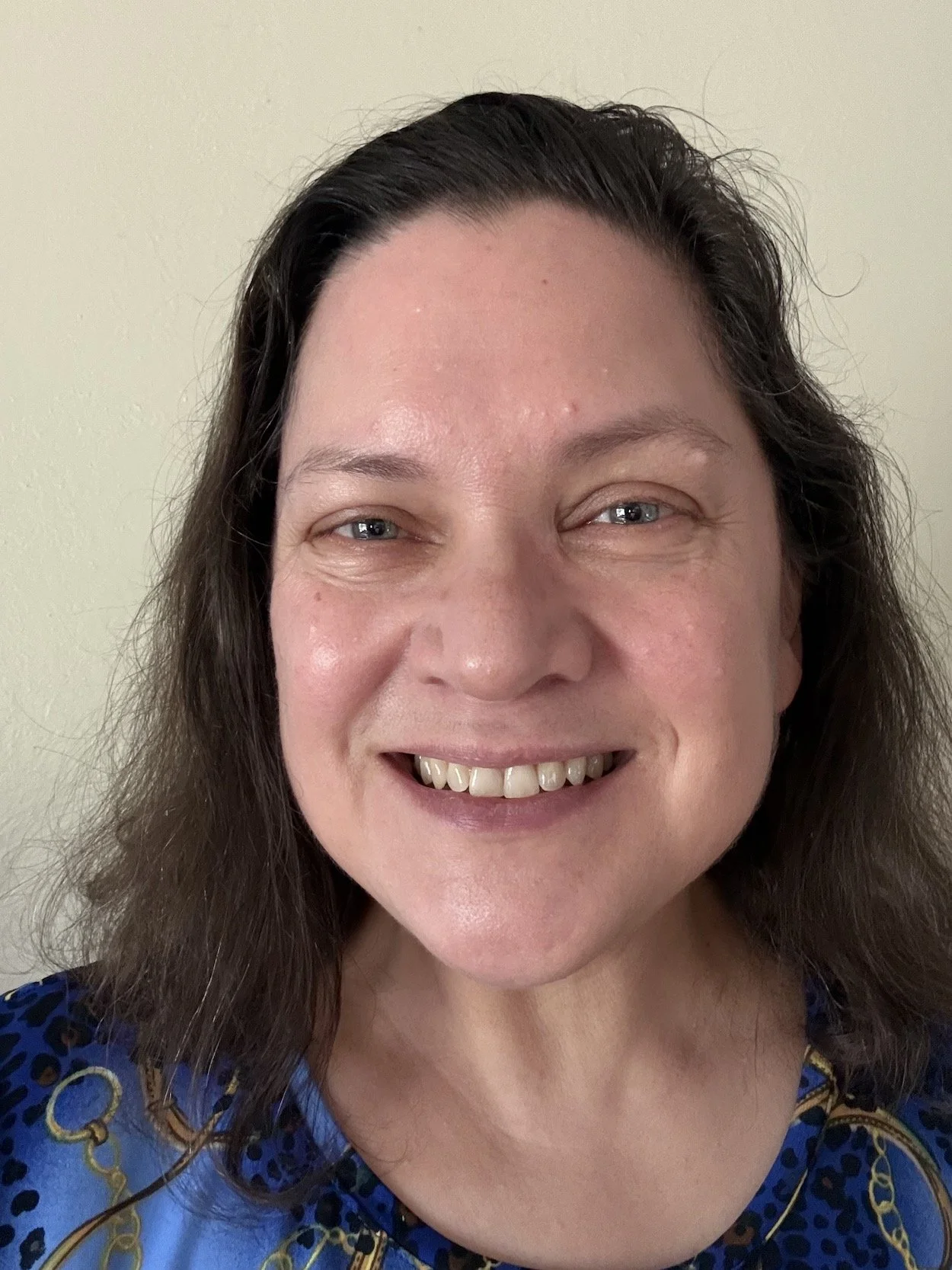
Later Career Category: Dr. Tanya Berardini, TAIR, Phoenix Bioinformatics, USA
Quotes about Tanya from her supporters:
“Over more than two decades, Dr. Berardini has played a central role in ensuring that accurate, computable, and accessible Arabidopsis knowledge is available to the global plant science community. Her work exemplifies the often under-appreciated, yet absolutely essential, intellectual infrastructure that supports modern biological discovery.”
“Dr. Berardini’s career represents an exceptional and sustained commitment to the dissemination of Arabidopsis knowledge. Through scientific curation, ontology leadership, institutional innovation, and community engagement, she has ensured that Arabidopsis knowledge remains accurate, accessible, and enduring. Her leadership not only preserved TAIR at a moment of crisis, but transformed it into a resilient, forward-looking resource that continues to serve over 100,000 researchers worldwide. Few individuals have had such a profound and lasting impact on how a research community creates, shares, and sustains its collective knowledge.”
“Tanya has done all of these things with genuine humility and grace. She is motivated by a desire to serve the scientific community and the satisfaction of seeing well-ordered data used in meaningful ways. TAIR has been such a valuable resource to the research community, and this is due in large part to her mostly unseen work.”
“In every aspect of her career, Dr. Berardini has demonstrated that the dissemination of knowledge is foundational to scientific advancement. By building, maintaining, and continuously improving the infrastructure that researchers depend upon, she has enabled discoveries that extend far beyond her own direct contributions. Her leadership, vision, and dedication have ensured that high-quality, accessible knowledge remains at the heart of plant biology research.”
For more than two decades, as a key leader at The Arabidopsis Information Resource (TAIR) Dr. Tanya Berardini has played a central role in ensuring that accurate, computable, and accessible Arabidopsis knowledge is available to the global plant science community. Dr. Berardini’s contributions to TAIR span nearly the entire lifespan of the resource. Throughout this period, she has been deeply involved in every aspect of TAIR’s scientific mission: gene annotation, literature curation, ontology development, community engagement, and strategic planning. One of Dr. Berardini’s most consequential contributions to the dissemination of Arabidopsis knowledge was her leadership during a moment of existential threat for TAIR. In the early 2010s, the U.S. National Science Foundation announced plans to phase out long-term operational funding for model organism databases, including TAIR. Faced with the potential loss of a foundational community resource, Dr. Berardini co-led the complex transition of TAIR away from exclusive dependence on U.S. federal grant support. In 2013, she helped establish Phoenix Bioinformatics as a not-for-profit organization and played a key role in designing and implementing a subscription-based sustainability model for TAIR. This transition required not only financial and organizational innovation, but also a deep understanding of community values and scientific priorities.
As a co-founder of Phoenix Bioinformatics, Tanya helped to ensure that the decades long investment in TAIR was not wasted and that millions of dollars of federally funded research would continue to be accessible. Establishing Phoenix and implementing a novel funding mechanism has enabled TAIR to continue its core mission of curating and disseminating Arabidopsis knowledge.
Dr. Berardini was instrumental in building trust with users, libraries, and institutions worldwide, articulating the value proposition of sustained, high-quality curation. More than a decade later, TAIR remains fully operational, scientifically authoritative, and financially independent, an outcome that stands as a landmark achievement in biological data stewardship. Further, it is highly trusted. The TAIR sustainability model is now widely recognized as a case study for the broader life sciences, influencing discussions of database funding across genomics, agriculture, and biomedicine.
The initiatives and projects that Tanya and TAIR have developed to support the Arabidopsis community are numerous:
Gold-standard functional genome annotation resource for Arabidopsis thaliana.
Tanya spearheaded, organized and disseminated the recent release of the TAIR 12 reference genome, the first major update since 2016. This genome release was the result of a massive global collaboration involving almost 100 scientists. This huge organizational challenge was compounded by the lack of any specific grant funding, and Tanya’s leadership at TAIR was critical to the success of this ambitious project.
Scientific literature curation Gene Ontology (GO) annotation for Arabidopsis & as a member of the GO Consortium. She spearheaded the design and build of internal open-source curation software (i.e. PubSearch/PaperGrab) for data curation, and developing public tools to enable researchers to directly contribute annotations to TAIR (i.e. BOAST, TOAST and GOAT). As part of that effort, she established innovative partnerships with three of the leading plant journals to tie data curation to the publication process.
Organized/co-organized many workshops on Arabidopsis informatics & database sustainability annually at multiple major conferences for 10+ years.
Mentored 20+ biocurators and community contributors, equipping them with the skills needed to sustain high-quality annotation and curation efforts.
Trained countless new users at workshops & conferences, then translating community needs back to TAIR for new resource development
Contributed to AgBioData Consortium working groups, helping build consensus on data sharing, sustainability models, and literature curation across agricultural genomics databases, work that directly benefits both the Arabidopsis and broader plant science communities.
Today TAIR serves over 100,000 researchers in more than 200 countries each month- an extraordinary testament to both its quality & global importance.
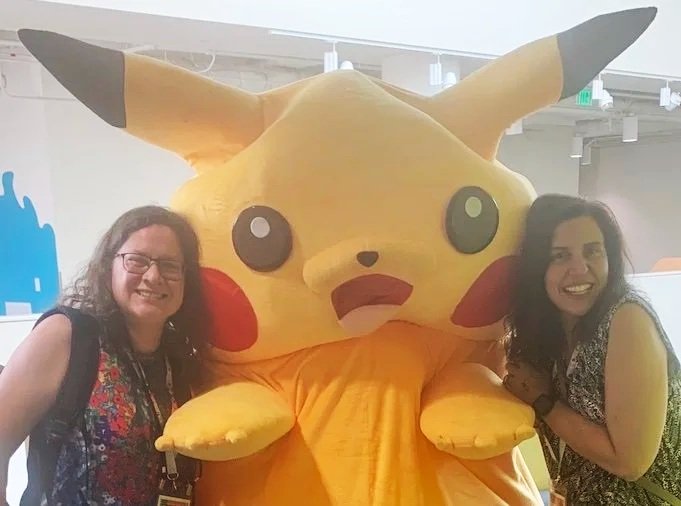
You are likely to find Tanya Berardini at a plant biology conference, such as the International Conference on Arabidopsis Research (ICAR), in her usual role of meeting with community members to discuss their bioinformatics needs and sharing out what TAIR has been doing recently to support the community. She will most likely hand you multiple giveaways from the TAIR booth with the cheeriest of smiles!
Picture from ICAR 2024- San Diego. Tanya- left- is shown with Joanna Friesner, right (ICAR 2024 organizer). They encountered Pikachu wandering the halls. Pikachu agreed to take a picture and also probably was given stickers from Tanya about micro-publications.
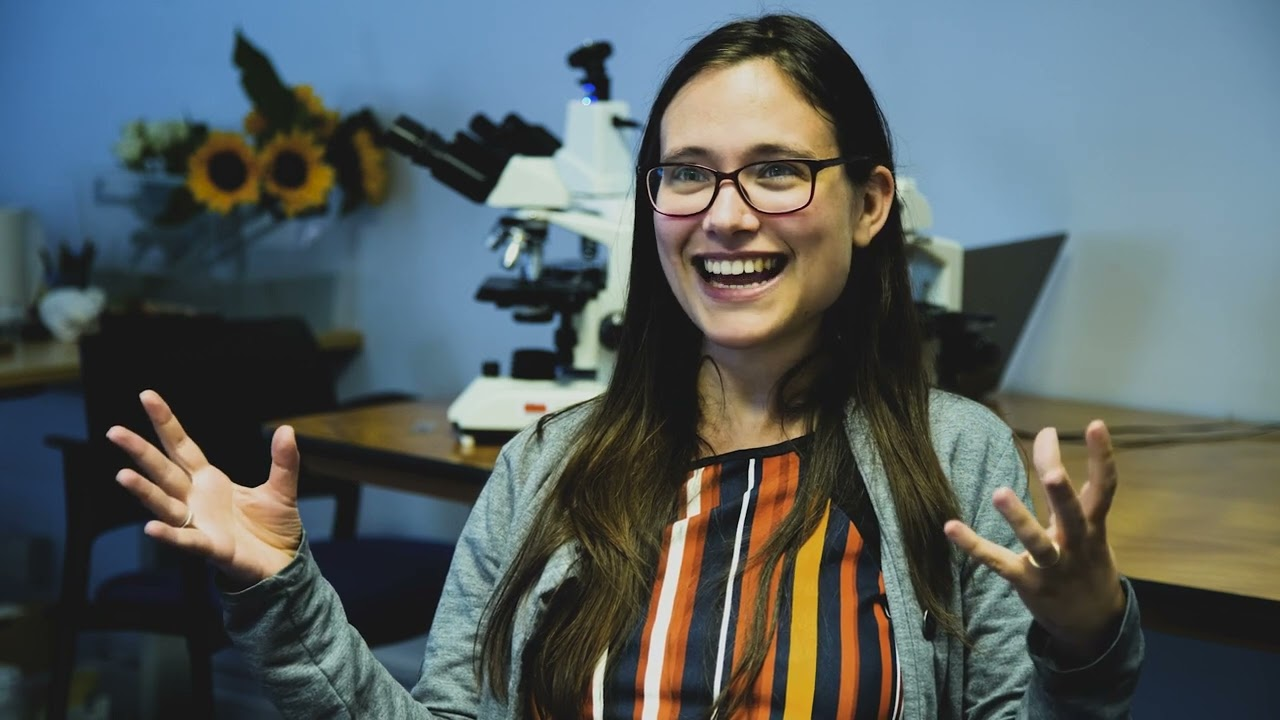
Later Career Category: Dr. Daphne Ezer, University of York, UK
Quotes about Daphne from her supporters:
“Daphne is an outstanding communicator and is highly effective in generating excitement about plant science, thus bringing researchers and communities together. She has undertaken some inspiring projects, including a citizen science activity across 50 primary schools located in various regions across the UK, including rural, farming communities. Students at these schools were tasked with cultivating spring onions outdoors in a hydroponic setup that they themselves constructed, and they recorded and analyzed growth curves. This endeavor provided students from underserved communities with a more profound insight into academic research.”
“Dr. Ezer has creatively incorporated visual arts, bioinformatics, Arabidopsis research, and broader plant biology themes into her teaching. For example, she assigned students to read predominantly Arabidopsis papers and then tasked them with creating artworks that elucidate the scientific concepts. In one, a student crafted a relief sculpture of a flower, featuring small doors that open to reveal cartoon plants in various phases of their circadian clock (drinking coffee, working, sleeping) to illustrate the circadian expression waves. In another artwork, students developed a 3-D sculpture representing the FLOR-ID flowering time network in Arabidopsis.”
“Daphne’s teaching has showcased excellent Arabidopsis research to the Biology department; and supported neurodivergent students interested in plant biology by allowing them to engage with the material in a non-traditional way. The quality of the artwork was tremendous, and the decision to present the outputs in our biggest teaching hall was a bold move that really paid off, attracting a diverse demographic of attendees, including non-plant scientists, university staff, students and the wider public.”
“Dr. Ezer is active in outreach, including presenting Arabidopsis research from her lab at Soapbox Science York events; these are a novel public outreach platform for promoting women and non-binary scientists and the science they do. She discussed how plants respond to the colors of the sunrise on the streets of York, highlighting her research on an Arabidopsis early morning gene network, thus publicizing the importance of Arabidopsis research to the wider plant sciences.”
“Daphne has incorporated a plant biology project into Big Data Biology/Becoming a Bioscience modules for second year undergraduates. These efforts will contribute to bringing in more bioinformatics talent into the Arabidopsis community and making bioinformaticians aware of Arabidopsis data resources. Daphne also organized a Coding Club for biology PhD students to enhance their computational skills and share best practice. These acquired skills are being actively applied to their projects as well as developing new Arabidopsis projects together that build on computational analyses.”
“Ezer has furthered the cause of Arabidopsis and plant science research through her outreach initiatives. The Ezer lab "duck"- as part of the University of York art trail- serves as a means to emphasize how the investigation of Arabidopsis development and the circadian clock can lead to groundbreaking advancements in vertical farming. This installation has become a permanent fixture on campus, dedicated to promoting Arabidopsis research.”
Daphne Ezer says that her “journey into Arabidopsis research began serendipitously” when her PhD advisor decided to leave academia which pushed her to find a new academic home. Her first stop was in a new field: plant science and the Arabidopsis community, and while she initially intended it to be temporary, she realized appreciated the open-science and collaborative ethos of the Arabidopsis community and she stayed.
About a decade after moving into plant biology from primarily computational work, Dr. Ezer now engages in teaching, research, and outreach in a multitude of ways (too many to even mention, let alone describe in this article!) Her research program focuses on the circadian clock and dynamic light and thermal signals and she continues to publish her research while engaging in teaching, outreach and communication.
Here are a few examples of Dr. Ezer’s creative and collaborative plant biology knowledge dissemination efforts:
Teaching: She recently became the Co-Director of the Yorkshire Bioscience Doctoral Training Programme, leading a 9-university network with 100+ students. In 2025 the Program added non-research-intensive institutions which enables her to expand equitable access to training and cohort building activities. She also co-leads initiatives to develop teaching resources for disabled students (example: tactile graphs for R to enable visually-impaired students to participate in bioinformatics research/courses. This new effort builds upon her previous work to develop a decolonized plant science curriculum that leverages the visual arts to engage neurodiverse students. In other work, she bridges computational and plant sciences by embedding open-access Arabidopsis single-nucleus RNA-seq datasets into the Bioinformatics Master’s of Science program. She shares videos of some of her efforts via her YouTube channel. One supporter noted her small group teaching series entitled “The Art of Plant Biology”, where, for example, her first class focused on the colonial history of botanical illustration and Daphne highlighted botanical artwork driven by women and indigenous botanists that included plant-animal interactions and ecological context that are absent in the Linnaeus-inspired illustrations. Over six areas of analysis, the students read and analyzed journal articles, often focusing on foundational Arabidopsis research, followed by exercises in creating artwork to ‘fill in gaps’ from the colonial botanical illustrations. The student artwork was presented in a department art exhibit and at a local Student Botany Festival. Daphne is notable for integrating plant biology into undergraduate bioinformatics courses including modules titled “Big Data” and “Becoming a Bioscientist”. She also organized a Coding Club for biology PhD students to enhance their computational skills.
Outreach: Her activities aim to lower the barriers to entry by diverse members of the public and academia into science. She engages in citizen science work to specifically give access to children that are often overlooked by university activities. She previously led a citizen science project across 50+ UK schools and more recently launched a new curriculum to engage both rural and urban school children in a 4-month research activity focused on how Brassicaceae respond to dynamic thermal signals. Daphne reports that this project has led to real impact, “for example, one teacher reported that a student who had never raised their hand once in class all year went up to the PhD student [project assistant] and spoke to her extensively about her research after class. On a broader scale, this work highlighted that many primary students in the UK are very confused about the difference between science and engineering, and our curriculum successfully explained why science has value independent of engineering outcomes.” With respect to translating knowledge from Arabidopsis into tangible public benefits, she leveraged Arabidopsis datasets related to photoperiod detection to optimize a vertical farm that has delivered many thousands of fresh salads to a children’s hospital in Liverpool. She also leads the York branch of Soapbox Science, creating opportunities for women and non-binary researchers to serve as science role models.
Communication: As a rare plant science voice with a computer science background, Dr. Ezer continues to be involved in shaping policies for AI for Social Good. She also communicates fundamental plant biology and Arabidopsis research to agricultural stakeholders. Through her recognition of the vital importance to understand farmer needs to help the research community prioritize the their research questions, she has facilitated workshops and fellowships with greenhouse engineers and farmers. “Plant Biology Art” is another approach that she uses to communicate. For example, her lab brought their research to the broader university and public through a campus art installation, a statue (for the duck-themed art trail, below) depicting Arabidopsis development from seed to senescence, intertwined with a vertical farm.
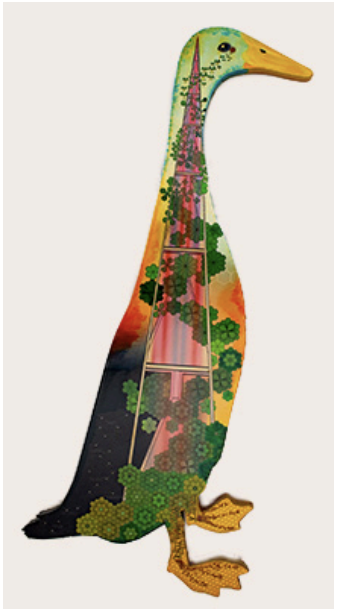
CYCLES: “The design highlights how our fundamental understanding of genes and plant development will help us produce a more sustainable food system.
The work of M.C. Escher inspired the groundwork for the composition of our design because of his imaginative use and mastery of tessellations, perspective and transitions. His tessellations are often transforming and in transitional states, moving from simple geometric shapes into more realistic, complex and dimensional organisms.
In the foreground, the life cycle of Arabidopsis thaliana (thale cress; the model plant) develops from seed to flowers and eventually produces its own seeds. In homage to mathematical biology, our design uses tessellating triangles and hexagons to create ‘rosette’ patterns.
The Arabidopsis plants weave their way through the infinite shelves of a vertical farm that runs through the duck design.”
Read more from the University of York
This duck was created by Gina Vong, Kayla McCarthy, Daphne Ezer, Will Clayton and Ethan Redmond.
Later Career Category: Courtney Price, Ohio State University, USA
Quotes about Courtney from her supporters:
“One of Courtney’s greatest strengths lies in her ability to forge connections with collaborators. During her time at the Arabidopsis Biological Resource Center (ABRC) she established partnerships with local organizations, The Center of Science and Industry and Franklin Park Conservatory, providing new opportunities for community engagement and allowing the ABRC to connect to a broader audience. She was a founding organizer of WestFest, a Science and Sustainability Festival, held annually on OSU’s West Campus. Through programming with community partners, as well as classroom visits, facilities tours, workshops, and mentoring, ABRC programming reached approximately 4,000 participants per year during Courtney’s tenure.”
“Science communication is Courtney’s passion, and she is incredibly good at it. She is friendly, has lots of energy and a great sense of humor, is very creative, and can take complex scientific ideas and convert them into the language and activities that can be understood by anyone – from a five-year-old to a grandparent.”
“Courtney has always been happy to support other people in their efforts to make science accessible to the public. She worked with OSU plant biology faculty, staff, and graduate students to help them get involved in outreach, develop Broader Impacts sections for NSF grants and design outreach activities, many of them focused on Arabidopsis. Courtney’s education and outreach efforts have been greatly appreciated at OSU and beyond; her impact on OSU and the community have been remarkable. She particularly enjoys working with graduate students and early career researchers, making sure that the next generation of scientists understands the importance of science communication and broader impacts.”
Courtney Price has a background in Educational Studies which made her a great candidate to support the Arabidopsis Biological Resource Center (ABRC) as the Education and Outreach Specialist for six years from 2015 to 2021. During that time she also was the Coordinator for the Ohio State University Translational Plant Sciences Graduate Program. For 6 years at the ABRC, Courtney was responsible for planning and implementing programming and for growing outreach in alignment with ABRC’s goals to increase public awareness of plant science in general and Arabidopsis in particular. She led efforts to make resources and knowledge acquired through Arabidopsis research accessible to students and the public. This included developing teaching resources, providing mentoring and training for teachers and researchers, and creating programming for community events.
Courtney’s supporters noted her skill in collaborating with a broad set of stakeholders from K-12 students and teachers, scholars at the undergraduate and graduate levels, the public and the global Arabidopsis community.
Courtney has spent years working tirelessly in science outreach and education, where her focus has been to create engaging and fun experiences for all levels of learners. Her goal is to to engage with learners, build a connection with them, and help them see that science can be fun. Through the experiences she facilitates, she aims for people to see science as connected to their daily lives, so that they develop curiosity and a desire to know more.
Courtney comments “science is not just something you read about. It not something only done behind closed doors in sterile laboratories by people who have spent years in college. Science is for doing. It is a part of everything. Science is for and can be done by everyone. That is the motivation behind my science outreach and education work.” In her view, the best way to cultivate a love of science is through hands-on engagement. Courtney notes that “plants provide an amazing opportunity for learners of all ages to engage in hands-on learning.”
Here are some examples of the initiatives and programs she developed or coordinated as she supported the ABRC and the community:
In 2017 she cofounded WestFest to develop a public science event with the goal of igniting a passion for science in kids through interactive hands-on exhibits. The initiative has now grown to have 40 booths dedicated to helping kids get interested in a variety of STEM fields.
Developed SPROUT (STEM Professionals Reaching Out) for ABRC. SPROUT was a professional development and outreach engagement program designed to support science communication skill development for plant science researchers and Ohio State and provide opportunities for researchers to get involved in ARBC outreach programs. This cohort-based program provided science communication workshops and activity development support for graduate students, postdocs and faculty. The goal of the program was to increase researcher confidence in translating their scientific expertise into public presentations and hands-on activities.
Seed Sleuth is a community participatory science project designed by the ABRC that was made available to the public through Zooniverse. Through Seed Sleuth more than 1,500 volunteers provided 155,553 classifications of 30,525 samples of uncharacterized Arabidopsis seeds. This project brought Arabidopsis research into the homes of hundreds of individuals while also benefiting ABRC operations.
In 2020, Courtney maintained outreach during the COVID-19 global pandemic by adapting programming to a virtual format. She also helped organize a virtual science festival presented by 18 units from The Ohio State University (OSU) and offering 22 programs over six days. Courtney partnered with five other outreach professionals to offer STEM education office hours providing remote support to informal educators and teachers and led a virtual teacher workshop in which attendees were introduced to one of ABRC’s education kits that she adapted for virtual learning.
Graduate student science communication support and professional development: She created multiple science communication opportunities for participants in the OSU Translational Plant Science (TPS) program; she provided a regular writing opportunity for students to write about their science and about graduate school experience in blog posts; with the help of her partners at the Columbus Center of science and Industry, she created an opportunity for the students to participate in videoconferences in which they interacted with middle and high-school students from across the country and talked about the importance of plants in our daily lives and about plant solutions to global problems; and finally, she regularly involved these students into local outreach activities.
Outreach & Communication- blog posts
Arabidopsis in education: How the Arabidopsis Biological Resource Center brings plant science to life
Alternative careers in science: My experience as an informal educator
Growing curiosity: Using plants to engage students in hands-on science education
Building with Biology at The Ohio State University: Partnering with community organizations to engage the public in science learning
As Courtney sums up in this interview, “For me personally, I love science and I love sharing that with people in a way that sparks curiosity and helps to develop an individual's sense of science identity. So many people see science as something inaccessible or disconnected from their daily lives. It is our responsibility as educators and researchers to flip the script on that, and you can't do that without engaging with the community.”