Three Scientists Honored For Extraordinary & Positive Impacts On The Arabidopsis Community
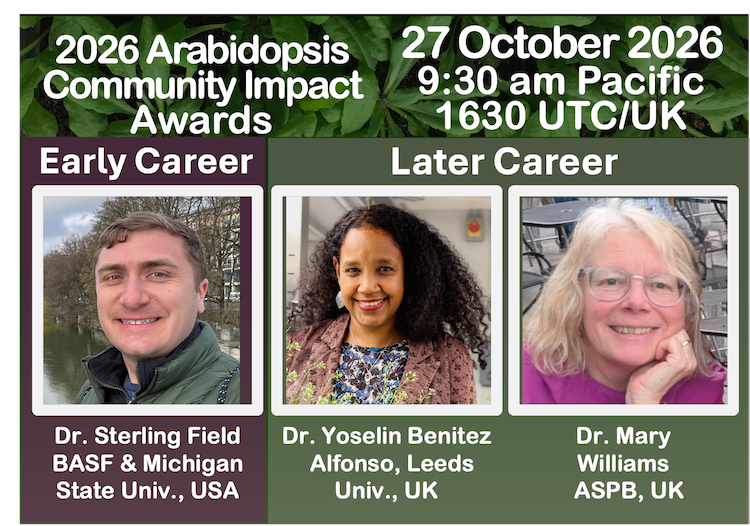
The 2026 Community Impact Awardees. Webinar: 27 October, 2026. Will be Recorded.
Click RSVP link above to receive the Zoom link and the link to the recording.
The North American Arabidopsis Steering Committee (NAASC) is deeply committed to the development, participation and recognition of Arabidopsis researchers from a diversity of backgrounds and experiences and to honoring those that go above and beyond to positively impact the Arabidopsis Community.
The Arabidopsis Community Impact awards recognize community members that have demonstrated commitment to supporting the Arabidopsis community and making positive impacts on it through one or more approaches including outreach, service, communication, mentoring, and/or advocacy.
The individuals serve as role models for our community.
These awards are given in two categories: early career (graduate student or postdoctoral scholar) and later career (faculty and other non-trainee position). Nominations were submitted by community members that then organized review packages consisting of applicant CV, candidate statement of their suitability for the award, and several letters of support written by colleagues. A selection committee comprised of NAASC members and several community members review and select awardees. NAASC thanks all the community members that submitted nominations, gathered supporting letters, and helped review and select this year’s awardees!
This year’s recipients will participate in an online panel webinar in the fall. Sign up to receive an invitation to the online panel and a link to the recording afterwards.
Based on nomination & support letters written by colleagues, the following inspirational Arabidopsis Community leaders were selected for this prestigious honor this year:
Sterling Field, early career category
Yoselin Benitez-Alfonso, later career category
Mary Williams, later career category
The awardees in 2027 will be invited to participate in a plenary session at ICAR 2027. Information here.
Nominate by 31 October 2026.
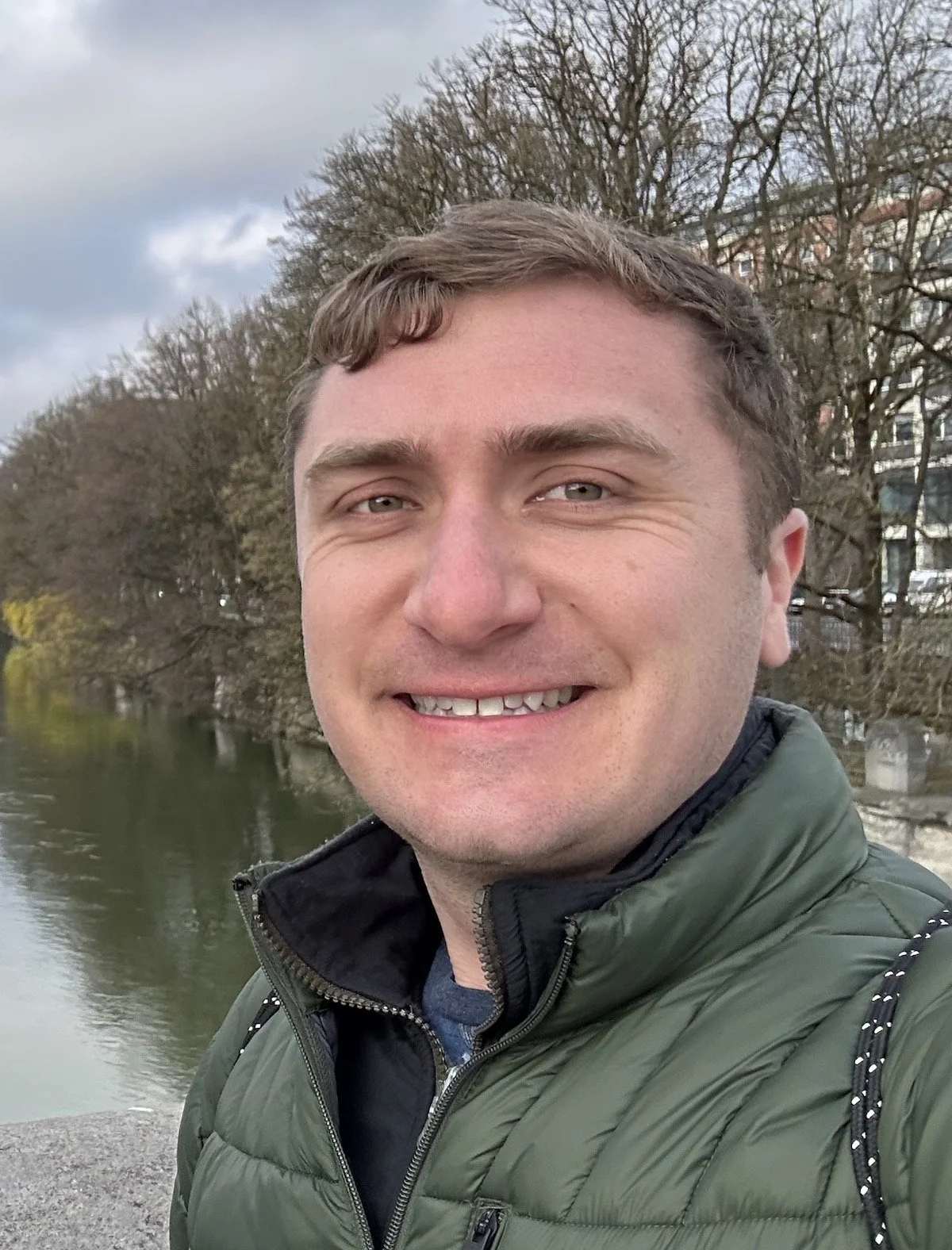
Early Career Category: Dr. Sterling Field, BASF APD Aspiring Leaders Program
Quotes about Sterling from his supporters:
“Scientists who are out and proud sometimes face risks to our career prospects and mental health. As an early career graduate student, Sterling was very brave in shining a light on the lack of visibility of queer scientists within plant science, especially within ASPB, and then taking action to address it. He has been very effective at finding allies in leadership positions so the community can be taken seriously.”
“Thanks to Sterling, we have safe spaces for plant science LGBTQ+ members and allies to come together and continue removing barriers to inclusion. He inspired me to be more visible as an LGBTQ+ scientist and to advocate for our community in more tangible ways. I know that he has inspired many others and will continue to be a leader both in front and behind-the-scenes.”
“Sterling remains humble and sensitive, laughing easily and never taking himself too seriously. He is a joy to be around, and universally liked by those lucky enough to work with him. He is a remarkable student, scientist, and a natural community leader. He left the university and the community in a better place, and I am certain he is improving his professional community as well.”
Dr. Field is currently a Specialist in a leadership development program at BASF Agriculture Solutions where he is learning how industry brings plant‑science innovations to the marketplace. Before joining industry, he was a lab manager and postdoctoral researcher in Dr. Sue Rhee’s lab at Michigan State University and at the Carnegie Institution for Science at Stanford. In addition to his focus on science, he has a goal to make the science community become more inclusive and to support the next generation of plant scientists by helping the Lesbian, Gay, Bisexual, and Transgender (LGBT) plant science community.
He has advocated for the LGBT community by hosting workshops, webinars, and helped LGBT folks feel welcome in the plant science community.
Webinar: Panelist: LGBTQ+ Voices in Science & Community Science
Webinar: Panelist: Navigating a STEM Career as a Member of the LGBTQ+ Community
Webinar: Moderator: Support for the LGBTQ+ Community In and Around Plant Biology
Webinar: Panelist: We Are Here and We Are Scientists! LGBTQ+ Perspectives and Topics in Plant Science
He also co-wrote a letter to the editor of The Plant Cell journal as part of the “sowing the seeds of equity and diversity in academia and STEM disciplines”
Challenges facing LGBTQ+ early-career scientists and how to engage in changing the status quo. Field S, Rajewski A (2021). The Plant Cell. First published March 26, 2021 doi: 10.1093/plcell/koab094.
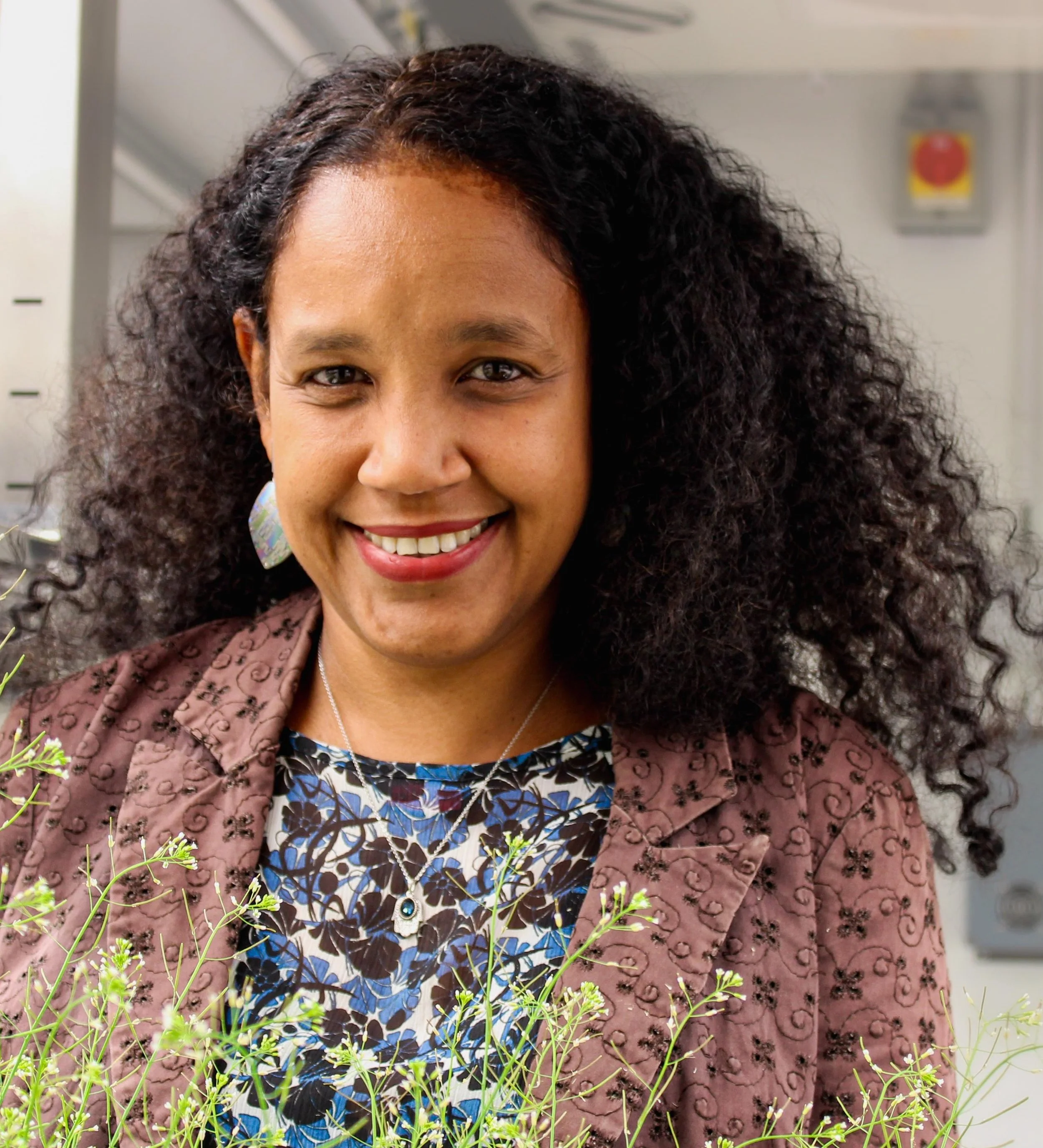
Later Career Category:
Dr. Yoselin Benitez Alfonso, University of Leeds, UK
Quotes about Yoselin from her supporters:
“Yoselin’s excellent research track record, accomplishments, and her selfless devotion to ensuring the Arabidopsis and wider bioscience communities continue to excel in a diverse and inclusive manner is truly inspirational. I am impressed by the many major leadership roles she has taken on over the years, while still delivering top-notch research from her own group.”
“Recognizing Dr. Benitez-Alfonso's service and leadership with this award will not only reward her commitment to improving the NAASC community but will also serve as inspiration for young scientists hoping to follow in her footsteps.”
“At the BiPS (Black in Plant Science) conference, many early career researchers shared their stories with me about how they had been supported by Yoselin at some point in their career (as undergraduates, graduate students or postdocs), highlighting the positive impact of her mentoring in the next-generation of plant scientists.”
“She was elected by her peers to serve from 2013-2020 on the Genomic Arabidopsis Resources Network (GARNet) community-facing network that acted as an advocate of Arabidopsis research and plant science in general in the UK and worldwide.Yoselin played a significant role in GARNet’s efforts to work closely with BBSRC to reverse declines in Arabidopsis research and plant science funding, and provided a template for how to effectively build a research & innovation network.”
Dr. Benitez-Alfonso is Professor in Interdisciplinary Plant Sciences at the University of Leeds (UK). Since 2013 she has had an independent position at the University of Leeds in the UK. She advocates for equity, diversity and inclusion and co-founded, and currently chairs, the Black in Plant Science Network dedicated to connecting, celebrating and cultivating the next generation of plant scientists in UK. She was promoted to full Professor in 2023, becoming the 66th Black Female Professor in the UK and the first working in Plant Sciences. As such, she is an inspiring and important role model to many UK scientists, and indeed, to scientists around the world.
Dr. Benitez-Alfonso maintains an active and highly productive research group, and regularly participates in collaborative community activities. As a colleague noted “Over nearly 20 years, she often utilized Arabidopsis as a model plant for many important discoveries that have dramatically advanced our understanding of plant cell biology. Yoselin is an internationally recognised expert on the biology of plasmodesmata and plant cell walls, and very much a pioneer in using interdisciplinary approaches to study plant cells. She brings together a unique blend of knowledge in biophysics, engineering, chemistry and biology. Her interdisciplinary approach to research places her in a forerunner position to reap the benefits from current and future interdisciplinary strategic directions.”
Concurrently, Dr. Benitez-Alfonson frequently engages in individual mentorship, support and outreach as well as local, regional, and international collaborations to build a positive and diverse research culture and community. As just one such example, she co-organized the webinar “Diversity & Inclusion for Excellence in Science”, held during ICAR 2023-Japan. This successful and well-attended (~150 participants) workshop was also co-organized with Joanna Friesner (NAASC) and Kanaka Bessho-Uehara (Tohoku University, Japan). The workshop was especially exciting due to the energetic and productive participation with the audience as the panelists discussed DEI initiatives and culture in their respective countries. In addition to those already mentioned, the panel included Terri Long (NCSU & Ai2EAR, USA), Keith Slotkin (DDPSC, University of Missouri, NAASC, USA), Gabriela Auge (Consejo Nacional de Investigaciones Científicas y Tecnológicas (CONICET) & ARGNET, Argentina), Andrea Ramirez (Stanford, USA), & Hironaka Tsukagoshi (Meijo University, Japan).
In another key example, Yoselin co-founded the Black in Plant Science network which addresses the enormous challenges Black minorities face during their STEM education and careers. It aims to connect, celebrate and cultivate UK-based Black plant scientists and is supported by funds from the Gatsby Foundation as well as Research Culture Leeds. The network is extremely active in organizing national events- and- ever the connector and collaborator- Yoselin has made links with other, related networks and programs, such as the NAASC Inclusivity Scholars Program and with The Plant Journal.
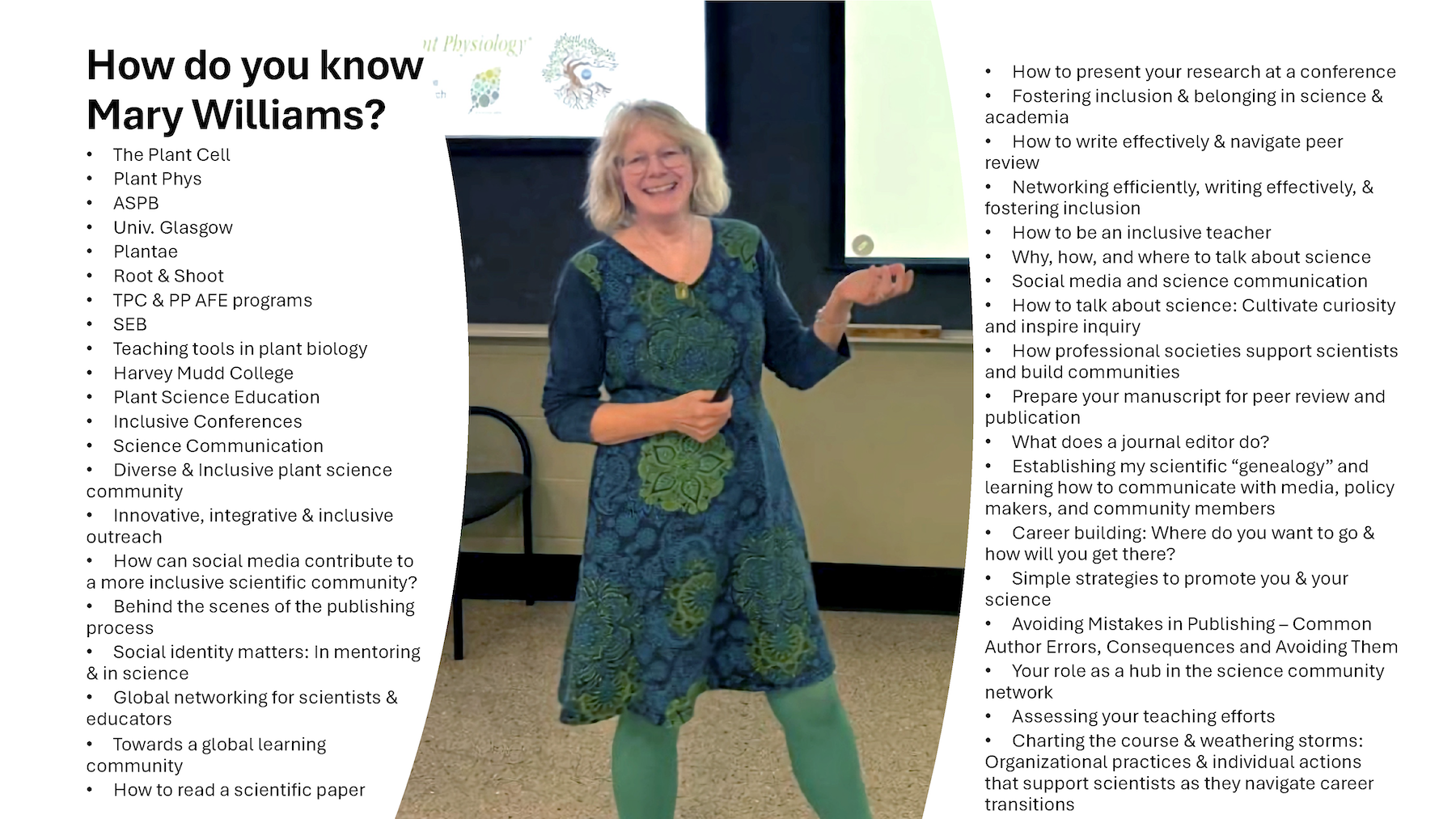
If you have been in plant biology in the last 40 years, you have probably encountered Mary Williams!
Most everyone in the plant molecular biology world knows Mary Williams. Especially if you are an early career scholar, or have submitted and article over the years to The Plant Cell and Plant Physiology journals. Or if you’ve attended an ICAR or - especially- an ASPB meeting! She’s just about ubiquitous!
Mary has always considered herself and Arabidopsis researcher starting back in 1991 in her postdoc with Ian Sussex where she studied root development. When she started her own lab in 1995, it was at a Primarily Undergraduate Institution (PUI) and Arabidopsis was the perfect plant for both her genetics teaching and because her lab had only a small growth chamber. She later (2009) joined ASPB as a Features Editor for Plant Cell and Plant Physiology but has never left an obvious love of supporting trainees that led her to first work at a PUI. Over her 40+ year career in plant biology she has taken many opportunities to support and impact the community through committee service (e.g., ASPB’s Education Committee), providing career development workshops and webinars, leading mentored opportunities for trainees, and through communication about plant research.
In the past 15 years- at conferences and universities- she has provided or organized over 70 workshops and seminars on numerous topics (see the image above for a sample!) She contributed 8 of these at various ICARs, including at ICAR 2025-Belgium, where she co-authored the recent article “Building a diverse and inclusive plant science community” that stemmed from collaborative work at the ICAR. In 2025 she also co-first authored “A manifesto for plant science education” published in Plants, People, Planet where they argue that “Plant science education needs urgent attention. Skilled plant scientists are needed to address major environmental and societal challenges, and global communities require plant-aware professionals to drive impactful policy, research and environmental stewardship.”
Just a few examples of her incredibly positive impact on our community:
2009: she created and authored the Teaching Tools in Plant Biology series
2016: co-developed the Plantae Fellows program, a mentored program for early-career scholars.
2021: she co-wrote, and is the PI of, a funding proposal to establish the Root & Shoot collaboration spanning six plant science societies and some external partners, with the goal to change the culture of plant science to promote diversity, equity, and inclusion. This initiative has funded equity training for leaders, established important conference travel awards, coordinated an inclusive conference working group (whose recommendations were recently published).
Over the past ten years, she initiated several mentored programs for early-career plant scientists that all together have engaged more than 500 scholars (Conviron Scholars, Plantae Fellows, Assistant Features Editors- AFE). A particular highlight here is the AFE program. AFEs are appointed to the editorial boards of Plant Physiology or Plant Cell journals (usually AFEs are late grad students, postdocs, or sometimes assistant profs.) AFEs highlight newly accepted papers by writing short articles to introduce them. Since the programs launched in 2018, AFEs have published nearly 800 articles for Plant Phys, and about the same number of TPC.
As one of her supporters summarized: “Mary Williams has demonstrated unwavering dedication to advancing diversity, equity, inclusion, and belonging (DEIB) in plant science. Her leadership, advocacy, and mentorship have made a lasting impact, and she continues to be a catalyst for positive change.”
Another noted: “Mary Williams is a tireless supporter of plant biology and early career scholars. There are very few others that have positively impacted our community as much as she has. The world needs more people like her!”
Quotes about Mary from her supporters:
“Mary's mentorship and advocacy have had a profound impact on numerous early-career scientists. Her mentorship in the Assistant Features Editors program for two important plant community journals (Plant Cell, Plant Physiology) have supported hundreds of early career plant scientists, many of whom have advanced to independent careers (and whom she still supports!)”
“Mary's communication efforts stand out as a powerful means of raising awareness and driving conversations. Through various social media platforms, her blog, and invited talks and workshops (such as ‘How to be a great teacher’, ‘How to talk about science’, ‘How can social media contribute to a more inclusive scientific community’, among many), Mary consistently curates and disseminates information that educates and informs the plant science community about the imperative for change.”
“I would not be able to reach this place and position I am in today without the unconditional support of Mary Williams. I am forever grateful for her generous support and care.”
“Mary's commitment to fostering an inclusive and supportive environment is evident throughout her career. As a Features Editor in The Plant Cell, Plant Physiology, and Plantae, Mary has played a pivotal role in reshaping the landscape of the plant science community to be more diverse, equitable, and inclusive. Her efforts extend beyond her professional roles, reflecting a genuine passion for creating positive change.”
“Mary has been seemingly tireless in moving plant scientists toward a more equitable and inclusive community. She has been able to marshal and inspire the considerable efforts of volunteer representatives and community members, a quite impressive feat, given the different histories and cultures of the constituent societies. Importantly, she leads the project by promoting and supporting the efforts and goals of those members of our community in more marginalized positions, not by imposing her own vision.”
“Through multiple avenues, Mary has demonstrated her commitment to DEIB and, more importantly, is having a major impact on making plant sciences a more diverse and welcoming profession.”