Three World-Renowned Scientists Receive Philip N. Benfey Arabidopsis Community Lifetime Achievement Award
Arabidopsis thaliana, a small, pervasive, yet seemingly nondescript weed that scientists adopted as their premier "lab rat", is the best-studied plant species on earth. Thousands of researchers across the world rely on Arabidopsis to study how plants grow and develop, photosynthesize, produce valuable nutrients, or withstand stress and pathogens. This foundational knowledge is essential for the development of new and improved crop varieties, innovations in forestry, plant conservation, and more. In 2023, the North American Arabidopsis Steering Committee (NAASC) established the Arabidopsis Community Lifetime Achievement Award to recognize Arabidopsis researchers whose careers made a major impact on plant sciences and scientists alike. The criteria for this honor include: distinguished research on Arabidopsis throughout a career spanning multiple decades; positive mentoring and impacts on their trainees and the success of their trainees in their own careers, and community service, outreach, public engagement, and/or innovative teaching.
NAASC named the inaugural award after Philip N. Benfey, a world-renowned Arabidopsis scientist and former NAASC member who unexpectedly passed away in 2023. Philip’s career exemplifies all aspects that the Lifetime Achievement award honors.
Nominations were submitted by community members that then organized review packages consisting of applicant CV and several letters of support written by colleagues and former mentees. A selection committee comprised of NAASC members and several community members review and select awardees. NAASC thanks all the community members that submitted nominations, gathered supporting letters, and helped review and select this year’s awardees!
This year’s awardees will participate in a fall online panel webinar. Sign up to receive an invitation to the online panel and a link to the recording afterwards.
Based on nomination & support letters written by colleagues, including former mentees, the following inspirational Arabidopsis Community leaders were selected for this prestigious honor this year:
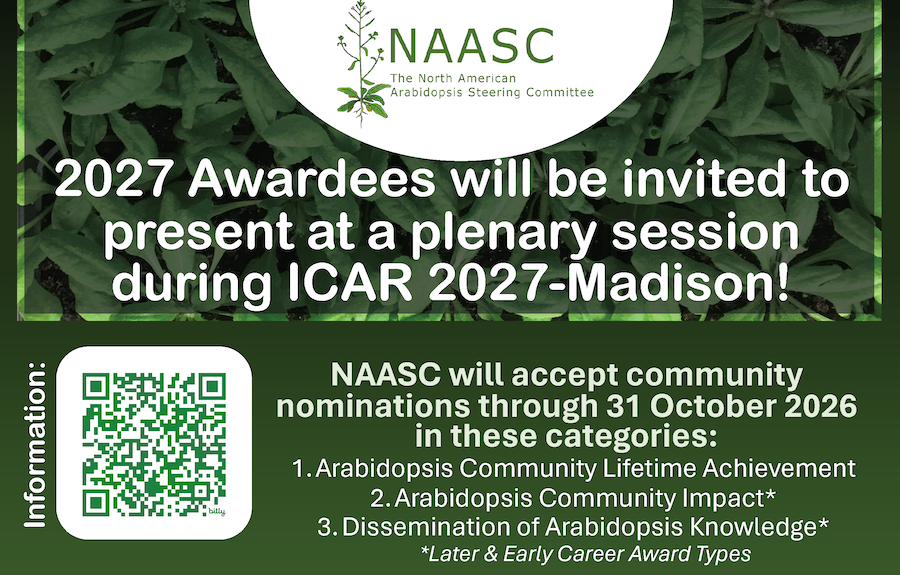
The awardees in 2027 will be invited to participate in a plenary session at ICAR 2027. Information here.
Nominate by 31 October 2026.
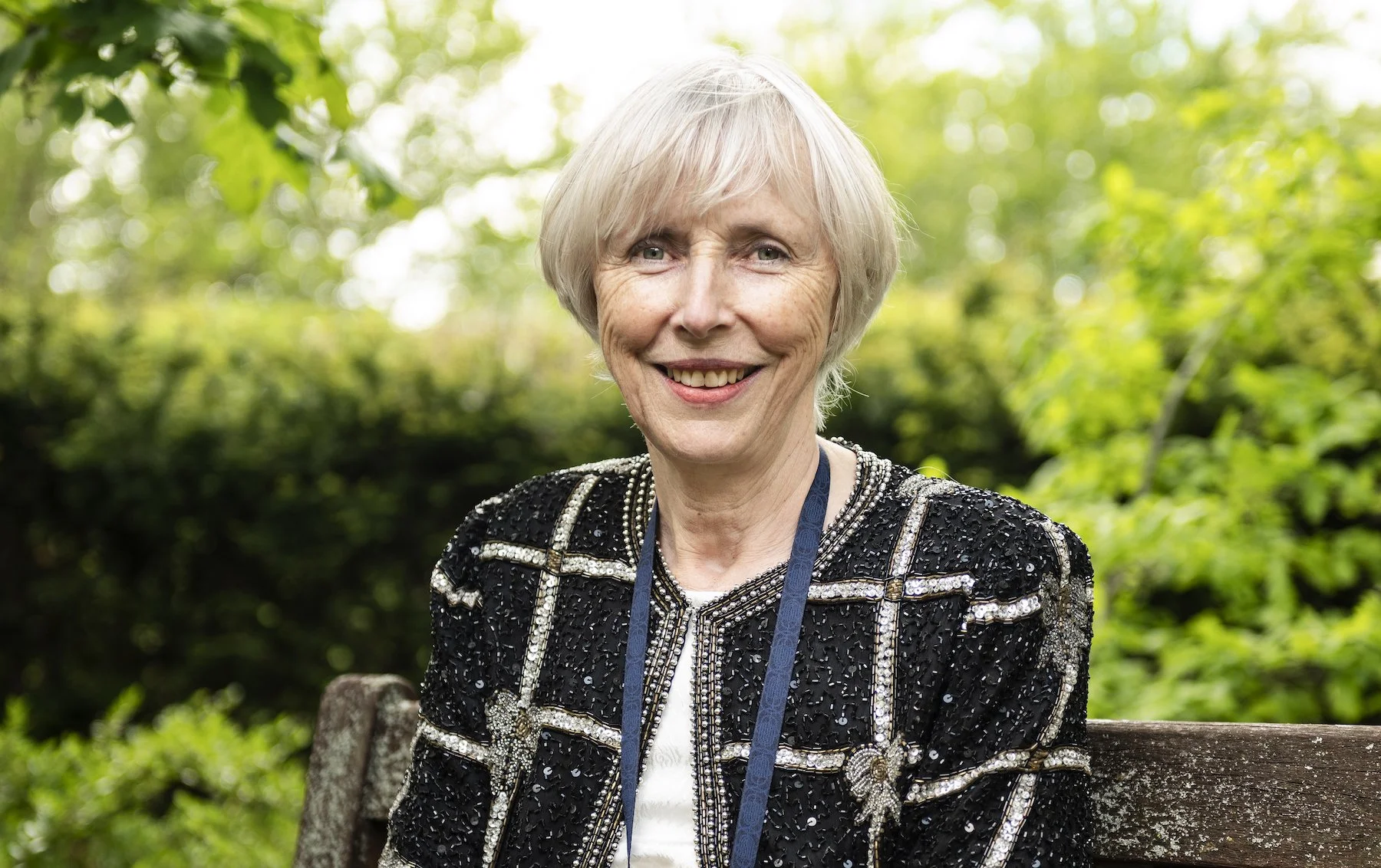
Professor Dame Caroline Dean, The John Innes Centre, UK
Since Caroline Dean started her lab in 1988 at the John Innes Centre, she has researched how plants use seasonal cues to time their development, specifically how vernalization promotes flowering. Through decades of rigorous research, Dr. Dean and her lab have not only unraveled the molecular mechanisms of vernalization, but have have also made fundamental contributions to our understanding of natural variation, epigenetics, chromatin regulation, long noncoding RNAs and transcription. In 2000, the Dean lab cloned the FRIGIDA (FRI) gene and showed that FRI is the major locus controlling natural variation in flowering time in Arabidopsis. Her lab has made numerous important and groundbreaking breakthroughs in the last 25+ years. 657-661). As summarized in her nomination to the Royal Society: “Her work has revealed the mechanism by which plants remember they have experienced winter, demonstrated novel RNA processing mechanisms controlling flowering and determined the molecular basis of natural variation in Arabidopsis flowering time.”
Prof. Dean has successfully trained over 50 scientists in her lab, and many of her former mentees have been highly successful in plant science. Caroline served as a role model, mentor, and an advocate for women in science. In an interview that was published in Development (2015) after Caroline Dean won the FEBS EMBO Women in Science Award, she shared advice she gives her postdocs in the lab: “My advice is to take the next obvious step at each stage of your career and not to worry too much about the long-term difficulties of a research career.” She continued, “As a PI you are your own boss, so if I needed to go off when the children were sick I did, and then caught up later. It’s not the type of job where you have to go in at set hours, so the flexibility helps enormously with the work-life balance.” At the John Innes Centre, she also mentors junior project leaders. She enjoys chatting with students and postdocs about their research careers. She says, “I hope the younger scientists think ‘she managed to have a career and two kids who seem perfectly normal, and she is still quite into her science’, and that encourages them to continue.”
A former mentee remarked “Working in her lab, and being guided by such a strong and inspiring woman scientist, has undoubtedly shaped my own career, for which I am deeply grateful. What I find most distinctive about her is her genuine passion for science and the way she naturally inspires it in others. She brings a remarkable sense of curiosity to every discussion, drawing people in and encouraging them to think more deeply and boldly. Conversations with her are always engaging and illuminating, and she has a unique ability to make science feel exciting and deeply rewarding.”
Quotes about Caroline from her supporters:
Dr. Dean was an absolutely superb mentor who provided inspiration and careful guidance to me including detailed technical training in forward, reverse, and quantitative genetics; skills that have benefited me enormously through the rest of my career. She also imparted to me a focus on rigor and careful design, execution, and interpretation of controlled experiments, while at the same time encouraging creative, innovative thinking about concepts. She always emphasized the importance of asking very big questions at the cutting edge of the field, and striving to have the greatest possible impact with our science. The training I received was utterly priceless, and provided me with a foundation of skills and ways of thinking that have stayed with me and shaped all aspects of my subsequent scientific research.
Professor Dean’s sustained contributions over decades exemplify not only scientific excellence but also remarkable intellectual continuity and depth. Her decades-long, field-defining research on FLC and flowering time regulation, her exceptional record of mentorship and trainee success, and her visionary leadership in fostering international scientific collaboration collectively represent the highest standards of our community.
The success of her trainees is a testament to the quality of the scientific environment she created. She fostered independence, critical thinking, and confidence, while maintaining a collaborative and intellectually vibrant atmosphere.
Prof. Dame Caroline Dean, is, without question, one of the leading scientists in plant biology worldwide, and her influence extends far beyond her own remarkable scientific contributions. Her discoveries have provided a foundational framework for understanding how environmental cues are integrated into developmental decisions, with broad implications for the plant scientific community. She has demonstrated an exceptional ability to identify important questions and pursue them with both depth and originality. Her work is not only highly impactful but also enduring, continuing to guide new research avenues across plant science.
Caroline’s impact on Arabidopsis research, plant biology, and more broadly in genome science are undeniable. She was part of a golden generation of scientists that established Arabidopsis as the primary model for plant biology in the 1990s-2010s. She made major contributions to establishment of the Arabidopsis genome sequence, making critical contributions to physical and genetic mapping and generation of the TAIR10 genome assembly. In addition, she generated several important genomic resources, including Ac/Ds transposon lines that facilitated chromosome studies and trait identification in multiple ways.
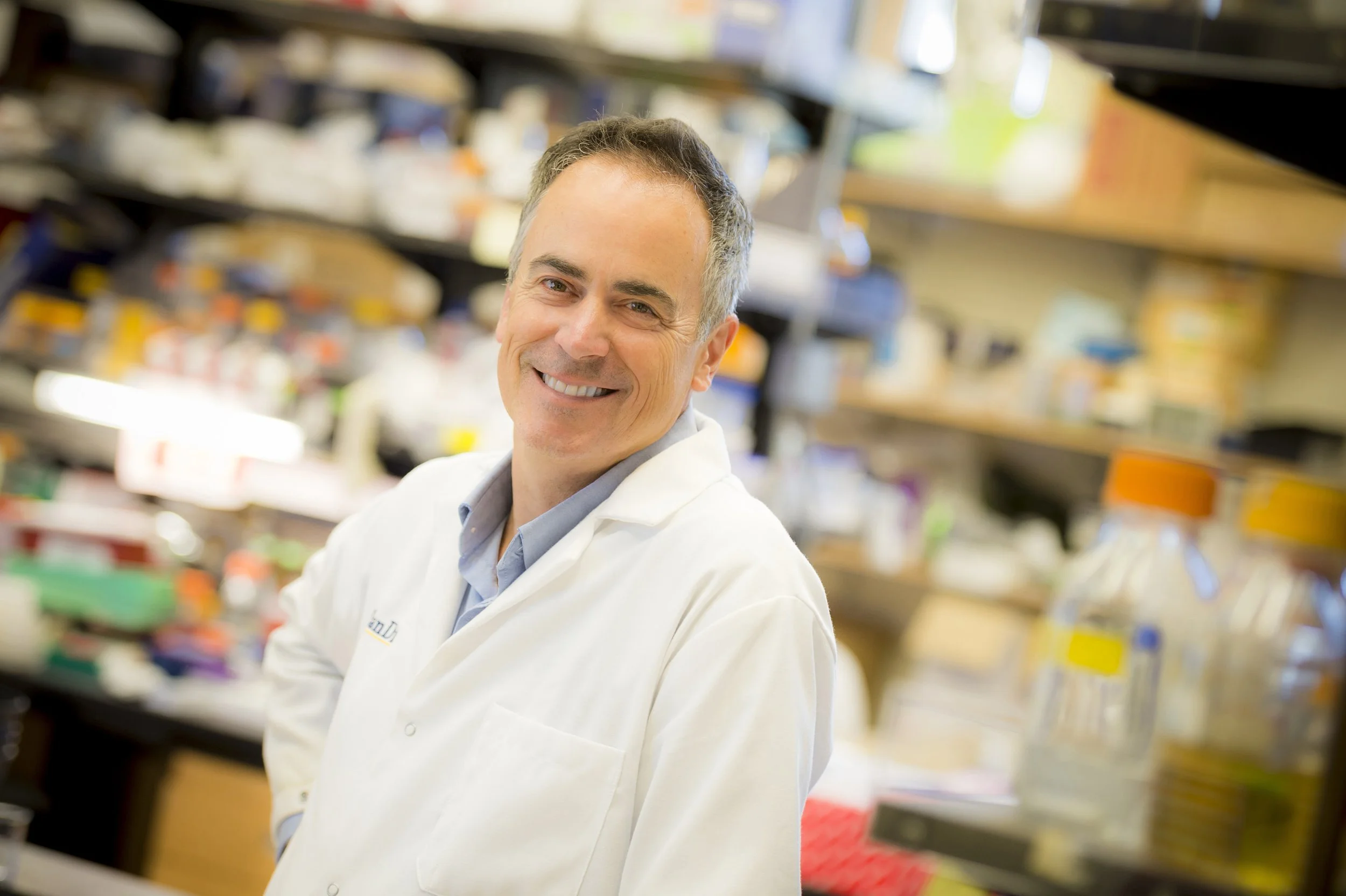
Dr. Julian Schroeder, University of California, San Diego, USA
As a graduate student with the eventual Nobel Prize winner Dr. Erwin Neher, Julian Schroeder pioneered the use of the patch-clamp technique to observe the function of single plant ion channel proteins. The application of this method to plant cells was a gamble and much more difficult than patching animal cell membranes because of the plant cell wall. In addition, a view in the 1980s was that land plants did not have ion channels. Julian took on this risky project that resulted in highly impactful pioneering results showing that plant cells did have ion channels. Due to Julian’s seminal contributions the field has become well established, and it is now accepted that ion channels play a crucial role in controlling stomatal opening and closing and are involved in many additional physiological processes.
Julian then undertook pioneering work to elucidate the role of ion channels in the context of whole cell functioning. His lab studied the molecular basis of signaling pathways that regulate ion channels in guard cells. Julian was able to show how the plant hormone ABA, the second messenger calcium, and signals such as hydrogen peroxide, regulate the flux of ions that are critical to guard cell shrinkage and swelling that determine stomatal opening and closing. In all of this work, Julian was often the first to develop and apply particular techniques to answer the biological questions connected to guard cell function. This detailed molecular understanding of guard cell function is now considered foundational for our understanding of plant cell biology and stomatal physiology that plays such a large part in regulating transpiration and photosynthesis.
“To those of us who have the privilege of knowing him personally, Julian is a deeply sincere and pleasant individual. He possesses a rare sense of humor and a "joy of life" that makes collaborating with him a true delight. He is a person who celebrates the successes of others as if they were his own. In a high-pressure academic environment, his presence is often a source of calm and encouragement. He is a person of integrity and honor who treats everyone with the same kindness and genuine interest. Professor Julian I. Schroeder is an individual of transcendent scientific merit whose work has defined a field and whose mentorship has built a global community.”
Quotes about Julian from his supporters:
Dr. Schroeder is a generous mentor, taking time to help students and postdocs develop as scientists, learn new techniques, become good writers, and prepare for scientific talks and interviews. And this help continues after one has left his lab. In looking back over his career, the number of his former students and postdocs that have been successful in science is astounding, especially considering the amount of effort he puts into helping each of them. I was extremely fortunate to have Julian as a mentor, he was instrumental in my success as a scientist. I know for a fact that many who worked with Julian feel the same.
Julian’s contribution to the future of science is perhaps most evident in his extraordinary record as a mentor. His laboratory is a global crossroads for excellence, having trained numerous Master’s students and an extensive list of PhD students and postdoctoral associates who have gone on to become leaders in their own right. The roster of his former lab members reads like a "who’s who" of contemporary plant biology. His mentees hold prominent faculty and leadership positions across the globe. Julian does not simply oversee research; he invests in the professional and personal growth of his students, fostering a culture of rigor, curiosity, and mutual respect.
I have consistently been impressed by Julian’s unparalleled contributions to plant biology. His career is a rare synthesis of groundbreaking scientific discovery, innovative methodology, and a steadfast commitment to the global scientific community.
What truly sets Julian apart is his interdisciplinary and innovative approach to biological questions. He does not merely follow established protocols; he creates new paradigms for discovery.
In terms of lifetime achievement, Dr. Schroeder has been producing excellent, breakthrough publications in top journals for 42 years since his first paper in 1984 was published in Nature and he is still going strong. It is also appropriate for him to receive an award named for Phil Benfey because they have a lot in common, both creative, hard-working, visionary plant scientists, respected throughout the world.
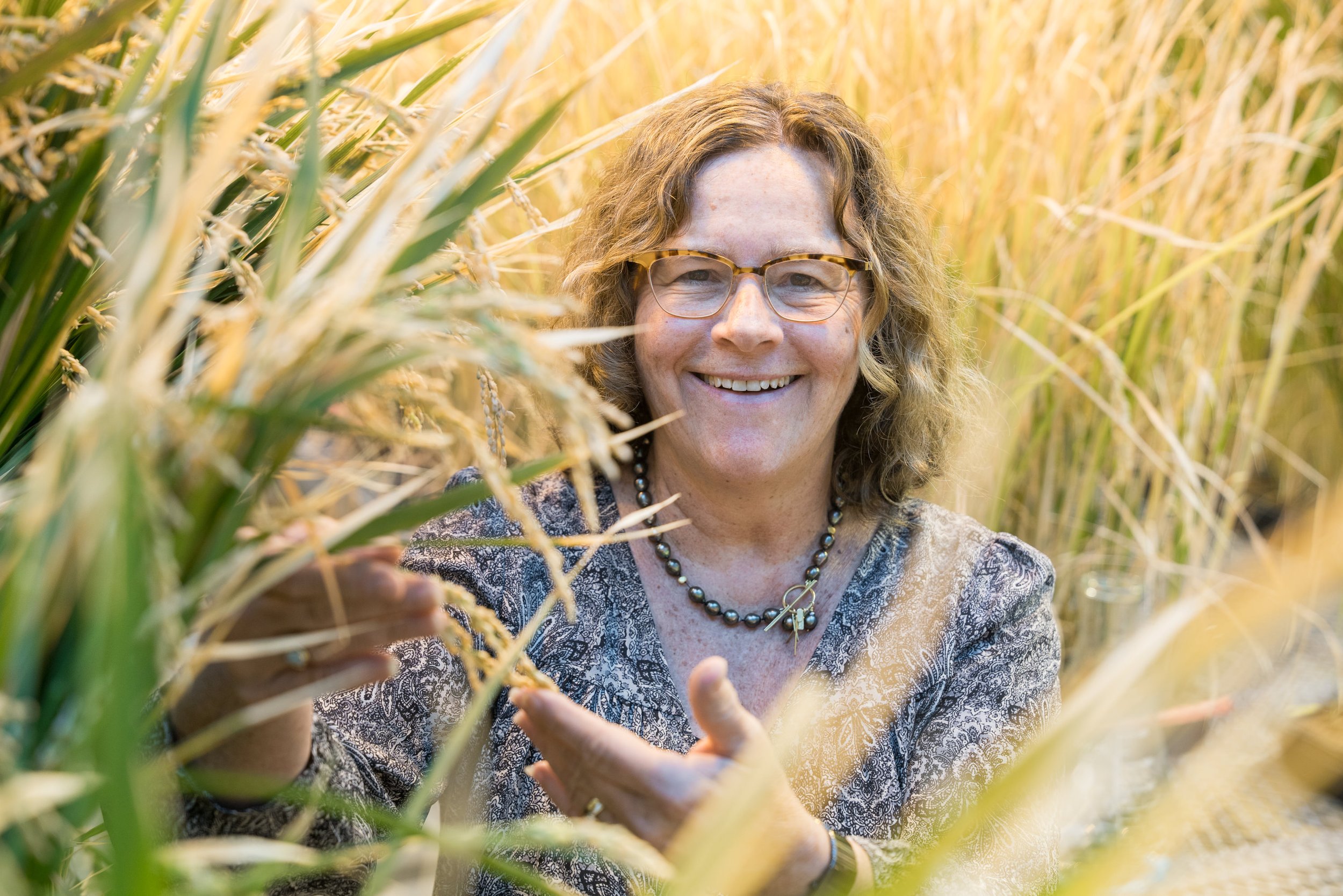
Dr. Mary Lou Guerinot, Dartmouth University, USA
Dr. Guerinot is a world leader in the field of plant nutrition. In addition, her service contributions are beyond exemplary. She has been a pillar in the Arabidopsis and plant biology communities for the last 30 years. Mary Lou and her trainees have revolutionized the field of Fe homeostasis in plants – both in Arabidopsis and crops. When she began her career in the 1980s, she pioneered the use of genetic approaches to study metal transport in plants. It is important to note that at the time, the metals field was dominated by traditional plant physiologists who were not sympathetic to these approaches. Nevertheless, she pushed forward, a testament to her determination and commitment. Her work put particular emphasis on the fundamental mechanisms of uptake, transport and storage of iron and zinc, metals that represent two of the four major micronutrients deficient in two billion people worldwide. Since plants are the major point of entry for essential metals into the food chain, her work laid the foundation for the development of crops that offer sustainable solutions for malnutrition.
In Mary Lou’s first seminal paper in Fe-homeostasis in plants described the IRT1 (iron-regulated transporter) in Arabidospis. IRT1 encodes the high affinity Fe-transport in plants and is essential for Fe uptake and plant viability. It is the founding member of a family of transporters which now has members across kingdoms. Using protein engineering Mary Lou improved the selectivity of IRT1 for Fe by eliminating its ability to transport Zn. In several additional ground-breaking early studies, including pioneering the application of x-ray fluorescent microtomography to visualize Fe in 3D in the Arabidopsis seed (Science, 2006), Mary Lou identified a significant portion of the players in Fe-homeostasis. She then focused on identifying the regulatory networks that control Fe-homeostasis.
With regards to service to the Arabidopsis community, Prof. Guerinot has made, many substantive contributions during her career. Her demonstration that Arabidopsis could be a powerful model for the study of nutrition inspired many others to follow in her footsteps. In the area of mentorship, Mary Lou has an exceptional record. Remarkably, she has trained nearly 50 graduate students and postdocs as well as ~120 undergraduate students (including 42 who completed honors theses with her). She served as one of the primary mentors for Dartmouth’s Women in Science Program (WISP) for over 20 years. Further, Mary Lou’s strong support for women in science has had a lasting impact on agricultural plant sciences. It is noteworthy that Mary Lou was the first woman to serve as Chair of any science department at Dartmouth College.
A former mentee remarked “Mary Lou is a model scientist and mentor that had, and still has, a major influence on the careers and personal lives of those of us who had the privilege to work and share time with her. Leading by example, Mary Lou strikes a perfect balance of scientific rigor, asking ambitious, central questions that shaped the field of iron and zinc nutrition in plants; of how to create a research group based on excellence, making everyone do their best, while fostering an upbeat, friendly, and collaborative attitude among its members; and how to be open, kind, and generous with time, resources and knowledge towards collaborators, inviting contributions and criticism, to everyone’s benefit. With her contributions to the Arabidopsis community, to our field, to science and science advocacy, Mary Lou has truly inspired her mentees to be the best scientists they can, with integrity, passion and courage.”
Quotes about Mary Lou from her supporters:
It’s important to highlight something extraordinary about Mary Lou’s record as an advisor and mentor – she has given her trainees the ability and freedom to deviate from her path; to create themselves in their own vision, rather than become clones of her or her career. This doesn’t happen by chance – it comes from a commitment to seeing value in divergent paths while trusting and walking alongside one’s mentees. I hope all students encounter a game-changing advisor and mentor like Mary Lou, and that all these people receive the recognition and gratitude they deserve. Their impacts on individuals and the world are beyond measure.
As a mentor, she is an inspiration. My time with her had the greatest impact on me, both personally and professionally, shaping how I approach science and the people doing it. Mary Lou has given me freedom to think by myself, provided plenty of opportunities to interact with other scientists and encouraged me to try new, innovative approaches, some which became a central part of what we use today in my lab.
Importantly, she has been advocating for women in science for decades, as is clear for the many Women in Science Interns she advised, and for the awards she received for supporting women in academia. While I was in her lab, she gave a talk about her own career at an event about Women in Science, and how that needed grit and courage on several occasions. As a man, her history made me understand that I should also work towards gender equality in science, inspiring me to be a more active, vocal member in favor of it.
Mary Lou has shown herself to be an incredibly caring and dedicated teacher and mentor. She has mentored a great number of students (undergraduate and graduate), many of whom have gone on to careers in science. This includes over 40 graduate students and postdocs as well as an incredible ~120 undergraduate students (including 42 who completed honors theses with her). She served as one of the primary mentors for Dartmouth’s Women in Science Program (WISP) for over 20 years and has been the recipient of 3 WISP mentorship awards. She has also been a tireless contributor to various community groups and societies including ASPB, TAIR, NAASC, the metals community, and more.